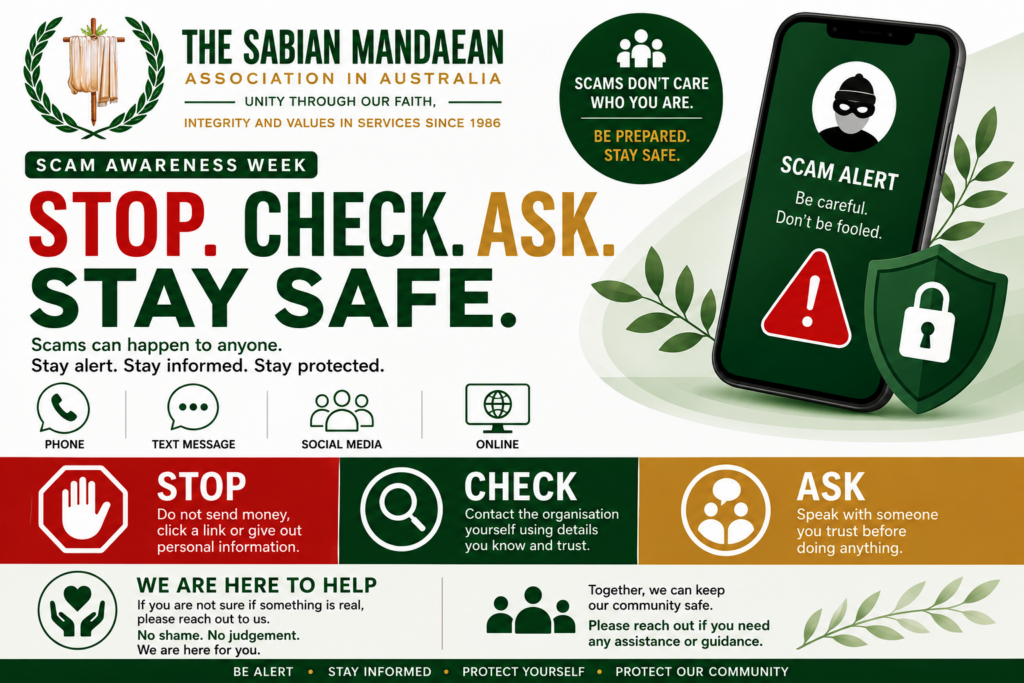
SCAM AWARENESS WEEK
Stop. Check. Ask. Stay Safe. Scams can happen to anyone. Scammers may contact you by phone, text message, email, social media or online. They may pretend to be from a bank, government department, delivery company, police, family member or another organisation you trust. They may try to make you feel worried, afraid or rushed so that you act quickly. 🚩 Warning Signs of a Scam Be careful if someone: – Asks you to send money urgently– Asks for your password, PIN or verification code– Tells you that you owe money or will be arrested– Says you have won a prize but need to pay first– Asks you to click an unexpected link– Asks you to download an app or give them access to your phone or computer– Pretends to be a family member who urgently needs money– Pressures you to make a decision immediately– Asks you to keep the conversation or payment secret 🛑 STOP – CHECK – ASK STOPDo not send money, click a link or give out personal information. CHECKContact the organisation yourself using a phone number or website you already know and trust. Do not rely on the contact details provided in a suspicious message. ASKSpeak with someone you trust before doing anything. ❤️ You Can Ask Us for Help If you receive a message, phone call or email and you are not sure if it is real, please reach out to our Association. There is no need to feel embarrassed about asking. It is always better to check before sending money or sharing personal information. Our team can provide guidance and help you understand what steps you may need to take. If English is not your first language, please do not let this stop you from asking for assistance. Remember: STOP before you act.CHECK before you trust.ASK if you are unsure. Please share this information with your family, friends and community — especially older family members and anyone who may need extra support online. Together, we can help keep our community scam aware and scam safe.
SCAM AWARENESS WEEK Read More »
Latest